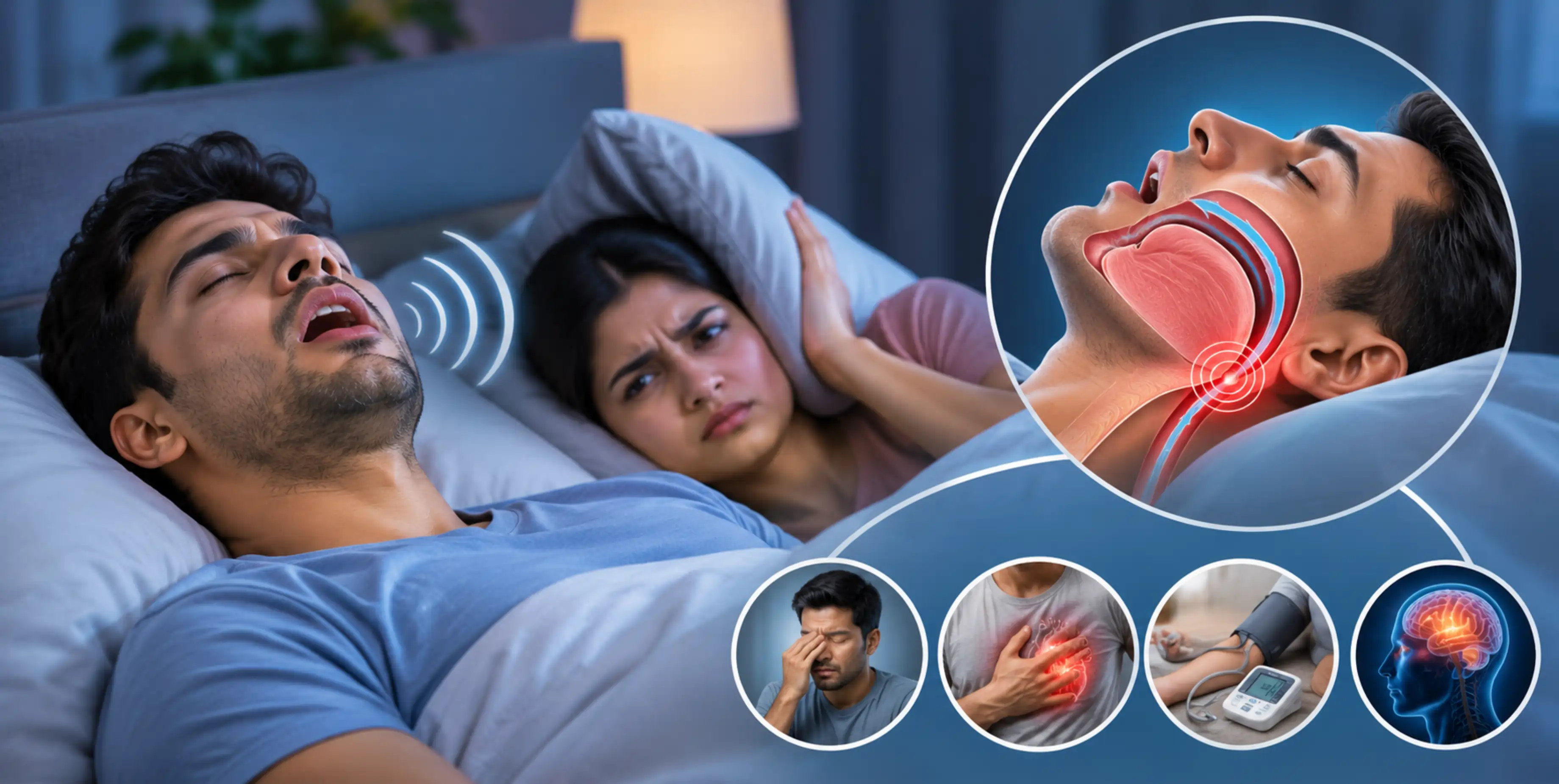
Sleep Apnea: Why Loud Snoring Could Be a Sign of a Serious Health Problem
Snoring is often treated as a harmless habit or a subject for family jokes. For some people, though, it is the audible sign of breathing that repeatedly stops during sleep. Recognising sleep apnea symptoms early matters because untreated apnea affects the heart, blood pressure, blood sugar and daytime safety.
What Is Sleep Apnea?
Sleep apnea is a disorder in which breathing pauses or becomes very shallow during sleep. The most common type is obstructive sleep apnea (OSA), where the muscles of the throat relax and the airway narrows or collapses. Each episode lasts at least ten seconds, can occur many times an hour, and ends with a brief arousal, often a gasp or snort, that the sleeper usually does not remember.
A less common form, central sleep apnea, occurs when the brain does not send proper signals to the breathing muscles. It is more often linked to heart failure, stroke or certain medicines.
Causes and Risk Factors
Anything that narrows the upper airway can contribute:
- Excess weight, especially around the neck and abdomen
- A large neck circumference, enlarged tonsils or a small lower jaw
- Nasal blockage from a deviated septum, allergies or chronic congestion
- Alcohol, sedatives or smoking
- Male sex, increasing age and, in women, the period after menopause
- Family history
Not everyone with sleep apnea is overweight. Anatomy plays a large role, and thin people can be affected too.
What Are the Early Warning Signs of Sleep Apnea?
Loud, habitual snoring is the best-known clue, but the pattern matters more than the volume. The early warning signs of sleep apnea include:
- Pauses in breathing noticed by a partner, followed by gasping or choking
- Waking with a dry mouth, sore throat or morning headache
- Feeling unrefreshed after a full night’s sleep
- Daytime sleepiness, including dozing off while reading, watching television or driving
- Difficulty concentrating, forgetfulness or irritability
- Waking often to pass urine at night
Children may show it differently, with restless sleep, mouth breathing, bedwetting or problems with attention at school.
Why It Should Not Be Ignored
Every breathing pause lowers blood oxygen and puts strain on the body. Over time, untreated apnea is associated with high blood pressure, irregular heart rhythm such as atrial fibrillation, heart failure, stroke and type 2 diabetes. Sleepiness also raises the risk of road and workplace accidents.
Diagnosis
Doctors begin with the history, often with the help of a bed partner, and questionnaires such as the Epworth Sleepiness Scale or STOP-BANG. Examination of the nose, throat, neck and weight follows.
Confirmation needs a sleep study. A polysomnography test, done overnight in a sleep laboratory, records breathing, oxygen levels, heart rhythm, brain activity and body movements. In selected patients, a simpler home sleep apnea test may be used. The result is expressed as the apnea-hypopnea index (AHI), the number of breathing events per hour, which classifies the condition as mild, moderate or severe.
Treatment
Treatment depends on severity, anatomy and other health conditions.
- Lifestyle changes: weight reduction, avoiding alcohol and sedatives close to bedtime, stopping smoking and sleeping on the side rather than the back.
- CPAP therapy: a mask delivers a steady stream of air that keeps the airway open. It is the standard treatment for moderate and severe apnea, and it works only when used regularly, so mask fitting and follow-up matter.
- Oral appliances: custom-fitted devices that move the lower jaw forward, sometimes suitable for mild to moderate cases.
- Treating nasal or throat problems: such as allergies, a deviated septum or enlarged tonsils.
- Surgery: considered when a specific blockage is found or when devices are not tolerated.
When to See a Doctor
Consult a doctor if snoring is loud and frequent, if a family member has seen you stop breathing during sleep, or if you feel tired through the day despite enough hours in bed. Seek prompt attention for sleepiness while driving, morning headaches that keep returning, or high blood pressure that is hard to control. Depending on the picture, the assessment may involve a physician, a pulmonologist or an ENT specialist.
Prevention and Recovery
Keeping a healthy weight, staying physically active, limiting alcohol and avoiding sleeping tablets without medical advice lower the risk. A regular sleep schedule helps too. People on treatment usually notice better sleep, clearer thinking and more energy within weeks, and blood pressure often improves with consistent therapy.
Conclusion
Snoring is common, but breathing pauses, gasping and persistent tiredness are not something to dismiss. A proper sleep study and a treatment plan suited to the individual can make a real difference to long-term health. Those searching for sleep apnea treatment in Mumbai can consult the team at Holy Family Hospital, Bandra West, for evaluation of snoring and sleep-related breathing problems. For anyone wondering which hospital treats sleep apnea in Mumbai, it is worth asking any centre about the availability of sleep studies and follow-up care before deciding. Patients looking for sleep disorder treatment in Bandra West can contact the hospital directly to confirm the services currently offered.