Heart Attack vs Cardiac Arrest: Understanding the Difference and When to Seek Emergency Care
The two terms are used interchangeably in everyday conversation, and even in news reports. They describe different events, though, and the difference decides what a bystander should do in the first few minutes. Understanding heart attack vs cardiac arrest can help families recognise an emergency early and act without hesitation.
What is the Difference Between a Heart Attack and Cardiac Arrest?
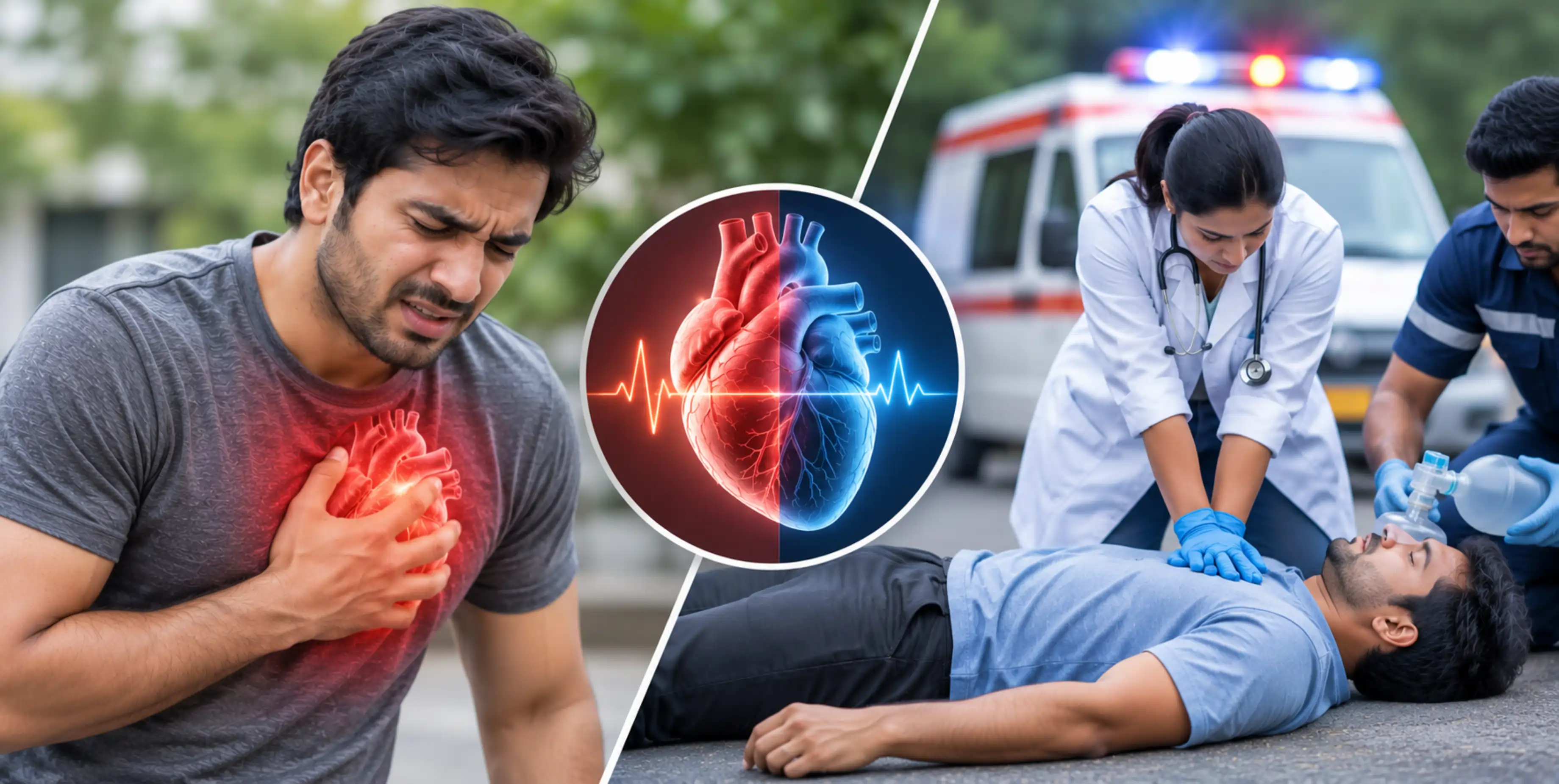
A heart attack is a circulation problem. One of the coronary arteries that supply blood to the heart muscle becomes blocked, usually by a clot forming over a fatty plaque, and the affected muscle begins to be damaged. The person is typically awake and aware, and the heart is still beating.
Cardiac arrest is an electrical problem. The heart’s rhythm becomes chaotic or stops, and it can no longer pump blood to the brain and other organs. The person collapses, does not respond and is not breathing normally. This is the answer to what is the difference between a heart attack and cardiac arrest: one is a blockage that starves the muscle of blood, the other is a failure of the heartbeat itself.
The two are connected. A heart attack can trigger a dangerous rhythm and lead to cardiac arrest, but cardiac arrest can also occur without a preceding heart attack.
Causes and Risk Factors
Heart attacks are most often caused by coronary artery disease. Risk rises with:
- High blood pressure, diabetes and high cholesterol
- Smoking or tobacco use
- Family history of early heart disease
- Obesity and low physical activity
- Age, and long-term stress
Cardiac arrest is commonly caused by ventricular fibrillation, a rapid, disorganised rhythm originating in the lower chambers. Scarring from an earlier heart attack, weakened heart muscle (cardiomyopathy), inherited rhythm disorders and severe electrolyte imbalance can all set it off.
Symptoms
Heart attack symptoms often build over minutes or longer and may come and go. These include:
- Pressure, tightness or heaviness in the centre of the chest
- Discomfort spreading to the left arm, jaw, neck or back
- Breathlessness, cold sweat, nausea or light-headedness
Women, older adults and people with diabetes sometimes have less typical symptoms, such as unusual fatigue, indigestion-like discomfort or breathlessness without obvious chest pain.
Cardiac arrest is sudden. The person collapses, does not answer when spoken to or shaken, and is either not breathing or only gasping. Occasionally there are warning signs shortly before, such as palpitations or dizziness, but many people have none.
Diagnosis
In a suspected heart attack, doctors usually begin with an electrocardiogram (ECG) and blood tests for troponin, a protein released when heart muscle is injured. Echocardiography and coronary angiography may follow to assess heart function and locate the blockage.
After cardiac arrest, the first priority is restoring circulation. Once the person is stable, doctors look for the cause using ECG, blood tests, echocardiography, angiography and, where needed, rhythm studies or genetic evaluation.
Treatment
For a heart attack, the aim is to reopen the blocked artery as quickly as possible, because heart muscle is lost with every passing minute. Options include:
- Angioplasty with stenting, which is generally the preferred approach when it can be done promptly
- Clot-dissolving medicines when angioplasty is not immediately available
- Bypass surgery in selected patients with extensive disease
- Medicines for blood thinning, cholesterol, blood pressure and heart protection
For cardiac arrest, survival depends on immediate CPR and early defibrillation, an electric shock that can restore a normal rhythm. Survivors are monitored closely, and some are advised to have an implantable cardioverter-defibrillator (ICD) to prevent a recurrence.
What to Do in an Emergency
If someone has symptoms suggestive of a heart attack, call an ambulance through 112 and do not drive them yourself. Keep the person seated and calm. Emergency teams may advise chewing a regular aspirin tablet if the person is not allergic, so follow the instruction of the dispatcher or doctor rather than deciding on your own.
If someone collapses and is unresponsive and not breathing normally:
- Call 112 and ask someone to find a defibrillator if one is nearby.
- Start hands-only CPR: push hard and fast in the centre of the chest, about 100 to 120 compressions a minute.
- Continue until the ambulance team arrives or the person starts responding.
Trained or untrained, starting CPR is better than waiting.
When to See a Doctor
Seek emergency care without delay for chest discomfort lasting more than a few minutes, pain spreading to the arm or jaw, sudden breathlessness with sweating, or fainting. Do not wait to see if it settles. Consult a cardiologist for recurring palpitations, chest discomfort on exertion, unexplained fainting or a strong family history of sudden cardiac death. People looking for the best cardiologist in Mumbai should prioritise a specialist who will take a full history and explain the findings clearly, rather than simply choosing the most advertised name.
Prevention and Recovery
Most heart attacks can be prevented or delayed by controlling blood pressure, blood sugar and cholesterol, stopping tobacco, staying active and keeping a healthy weight. After a heart attack or cardiac arrest, cardiac rehabilitation, regular medicines and follow-up visits reduce the risk of another event. Learning basic CPR is one of the most useful things a family can do.
Conclusion
A heart attack is a blockage; cardiac arrest is a loss of effective heartbeat. Both need immediate action, and knowing which is which makes that action faster. For anyone asking where to get emergency heart treatment in Mumbai, the answer is to call 112 and go to the nearest hospital with emergency and cardiac care. For heart evaluation, risk assessment and long-term follow-up, patients can consult the cardiology team at Holy Family Hospital, Bandra West, a cardiac emergency hospital in Bandra West for people living or working in the area to keep in mind. Please contact the hospital directly to confirm emergency services.