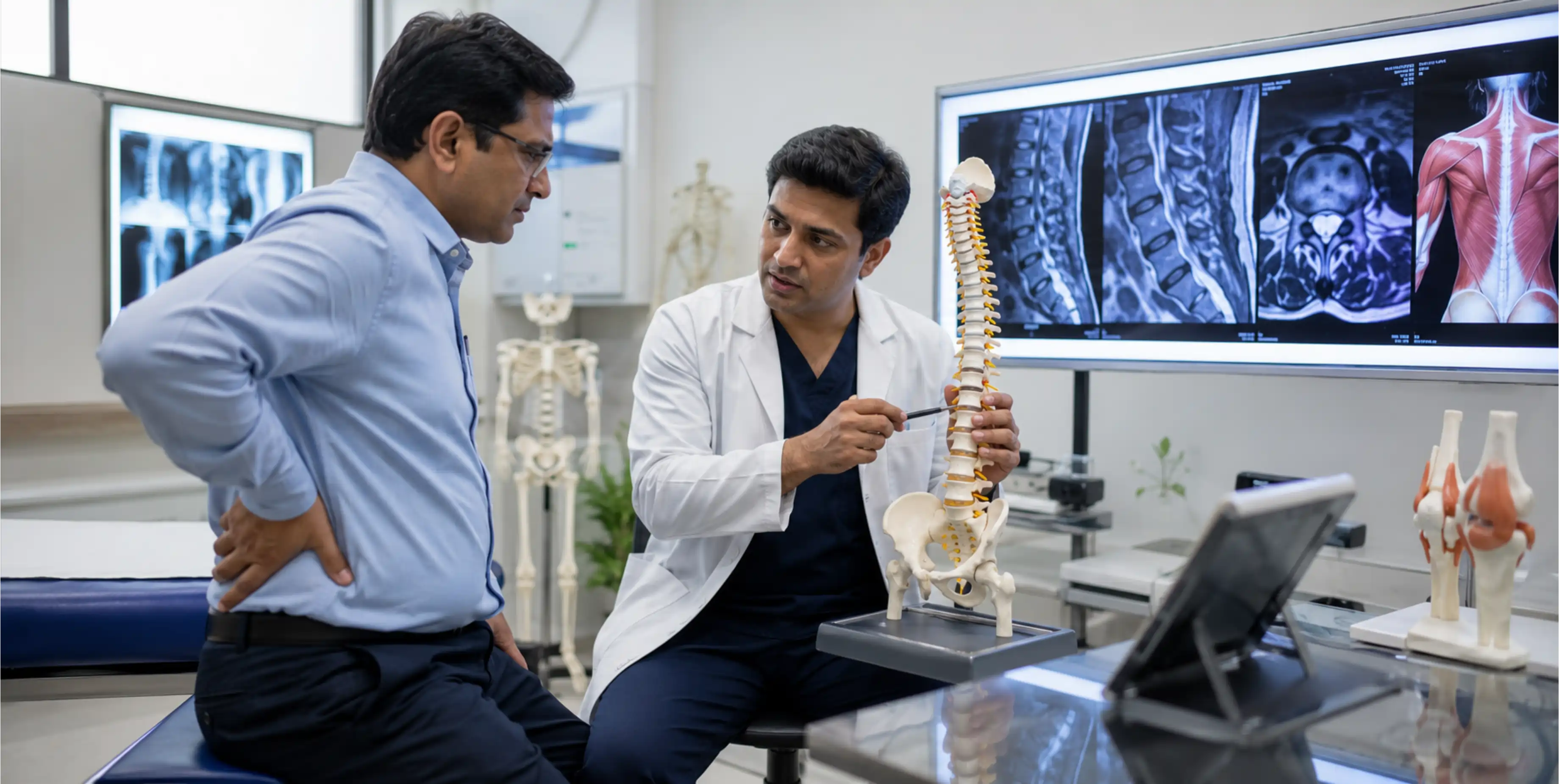
Spine Pain Vs Muscle Pain: When Do You Need an Orthopaedic Specialist?
Introduction
Back pain is one of the most common health complaints, but not all back pain is the same. Sometimes it's a pulled muscle from lifting something heavy, and sometimes it's something deeper going on with your spine. Knowing the difference can save you weeks of wrong treatment and unnecessary worry. If you're in Mumbai and struggling with persistent back pain, consulting a back pain treatment expert in Mumbai early can make a real difference in your recovery.
How to Tell If It's Spine Pain or Muscle Pain
Understanding what your body is telling you is the first step toward getting better. Muscle pain usually comes on suddenly after physical activity, feels sore and tender to the touch, and gets better with rest in a few days. Spine pain, on the other hand, tends to be more stubborn. It can be sharp, burning, or radiating, often travelling down your legs, arms, or around your chest.
Common signs that it might be spine-related:
• Pain that shoots down one or both legs (sciatica)
• Numbness or tingling in the hands or feet
• Weakness in the limbs
• Pain that doesn't improve with rest
• Stiffness that makes it hard to stand or walk straight
Signs it could be muscle pain:
• Localised soreness after exercise or heavy lifting
• Tenderness when you press on the area
• Improves within 3–5 days with rest and mild stretching
If your pain has lasted more than two weeks or is affecting your daily routine, it's time to see an orthopaedic doctor in Mumbai instead of waiting it out.
What Causes Spine Pain?
Spine pain has many triggers, and they're not always obvious. Poor posture, long hours at a desk, ageing, and sedentary lifestyles are among the most common culprits in urban India. But structural issues such as a herniated disc, bone spurs, or spinal stenosis can also be involved.
One of the most frequently diagnosed conditions is a slipped disc, where the cushion between two vertebrae pushes out and presses on nearby nerves. This condition can range from mildly uncomfortable to severely debilitating. A timely visit to a spine specialist in Mumbai helps identify whether you're dealing with a structural problem before it worsens.
Treatment Options You Should Know About
The good news is that most spine and back conditions respond well to treatment, especially when caught early. Your doctor may recommend:
- Physiotherapy and guided exercises to strengthen the core and reduce pressure on the spine
- Medications to manage pain and inflammation
- Injections for targeted nerve pain relief
- Minimally invasive procedures for conditions like disc herniation
For those with severe or recurring disc issues, slipped disc treatment in Mumbai has evolved significantly. Many cases that once required open surgery can now be treated with minimally invasive techniques, shorter hospital stays, and faster recovery.
Surgery is considered only when conservative treatments don't provide relief over time. A good specialist will always explore non-surgical options first.
Everyday Care Tips to Protect Your Back
Managing back pain isn't just about treatment, it's about lifestyle too. Here are some practical habits that genuinely help:
- Sit with support: Use a chair with lumbar support, especially if you work at a desk all day.
- Move every 30–45 minutes: Prolonged sitting compresses spinal discs. Short walks help.
- Strengthen your core: Gentle yoga, Pilates, or physiotherapy exercises build the muscles that support your spine.
- Sleep smart: A medium-firm mattress and sleeping on your side with a pillow between your knees can reduce spinal pressure.
- Lift correctly: Bend your knees, not your back, every time.
- Stay hydrated: Spinal discs lose water content with age. Staying hydrated keeps them healthier for longer.
- Small, consistent changes in daily habits often work better than any single treatment on its own.
When Should You Visit a Spine Surgery Hospital?
Not every spine issue needs surgery, but some do, and delaying that decision can lead to permanent nerve damage or loss of mobility. You should visit a spine surgery hospital in Mumbai if:
• Pain has persisted for more than 6–8 weeks despite medication and physiotherapy
• You experience loss of bladder or bowel control (this is a medical emergency)
• Progressive weakness is developing in your arms or legs
• Imaging (MRI or CT scan) has confirmed a structural spinal issue
Getting a second opinion is always okay. A trustworthy spine specialist will tell you honestly whether surgery is necessary or whether conservative care can still work.
Conclusion
Not all back pain is a spine problem, but not all back pain should be ignored, either. The key is knowing when rest is enough and when it's time to get expert help. Whether you need physiotherapy, specialist care, or advanced intervention, Mumbai has excellent options. Trust your symptoms, don't delay, and consult an orthopaedic and spine specialist in Mumbai if your pain persists, radiates, or worsens. Your spine supports your full body; give it the attention it deserves.