Recovery After Joint Replacement: How Physiotherapy Helps
Introduction
Joint replacement surgery can genuinely change a person's life, but the surgery itself is only half the story. What happens after the operation matters just as much. Many patients in Mumbai and across India are surprised to learn that physiotherapy after joint replacement plays a central role in how well and how quickly they recover. Without the right rehabilitation, even a perfectly performed surgery may not give you the results you hoped for.
If you or someone in your family has recently had joint replacement surgery, this guide will walk you through what to expect during recovery and why physiotherapy is not optional, it's essential.
Why Does Recovery Feel So Difficult After Joint Replacement?
After surgery, it is completely normal to feel stiffness, swelling, and discomfort around the operated joint. Your body has just been through a significant procedure, and the surrounding muscles, tendons, and tissues need time to heal and adjust to the new implant.
Some common experiences patients report after joint replacement include:
- Swelling and inflammation around the knee or hip
- Stiffness in the joint, especially in the morning or after sitting for long periods
- Weakness in the muscles surrounding the joint
- Difficulty walking or climbing stairs without support
- Pain during movement, which gradually reduces over time with proper rehabilitation
These are not signs that something has gone wrong. They are a natural part of healing. The positive news is that post-joint replacement after physiotherapy is specifically designed to address each one of these challenges in a structured, safe, and progressive way.
What Causes Prolonged Difficulty After Joint Replacement?
Recovery varies from person to person, and several factors can make rehabilitation more challenging:
- Age and overall fitness before surgery
- Weight, which adds stress to the healing joint
- Pre-existing conditions like diabetes or cardiovascular issues
- Delayed physiotherapy or irregular attendance at sessions
- Lack of home exercises between formal physiotherapy appointments
This is why most experienced surgeons at any reputed knee replacement hospital in Mumbai will strongly recommend beginning physiotherapy as early as day one or day two post-surgery, not weeks later.
How Physiotherapy Helps: The Treatment Approach
Physiotherapy after joint replacement follows a structured, stage-by-stage approach tailored to each patient's progress.
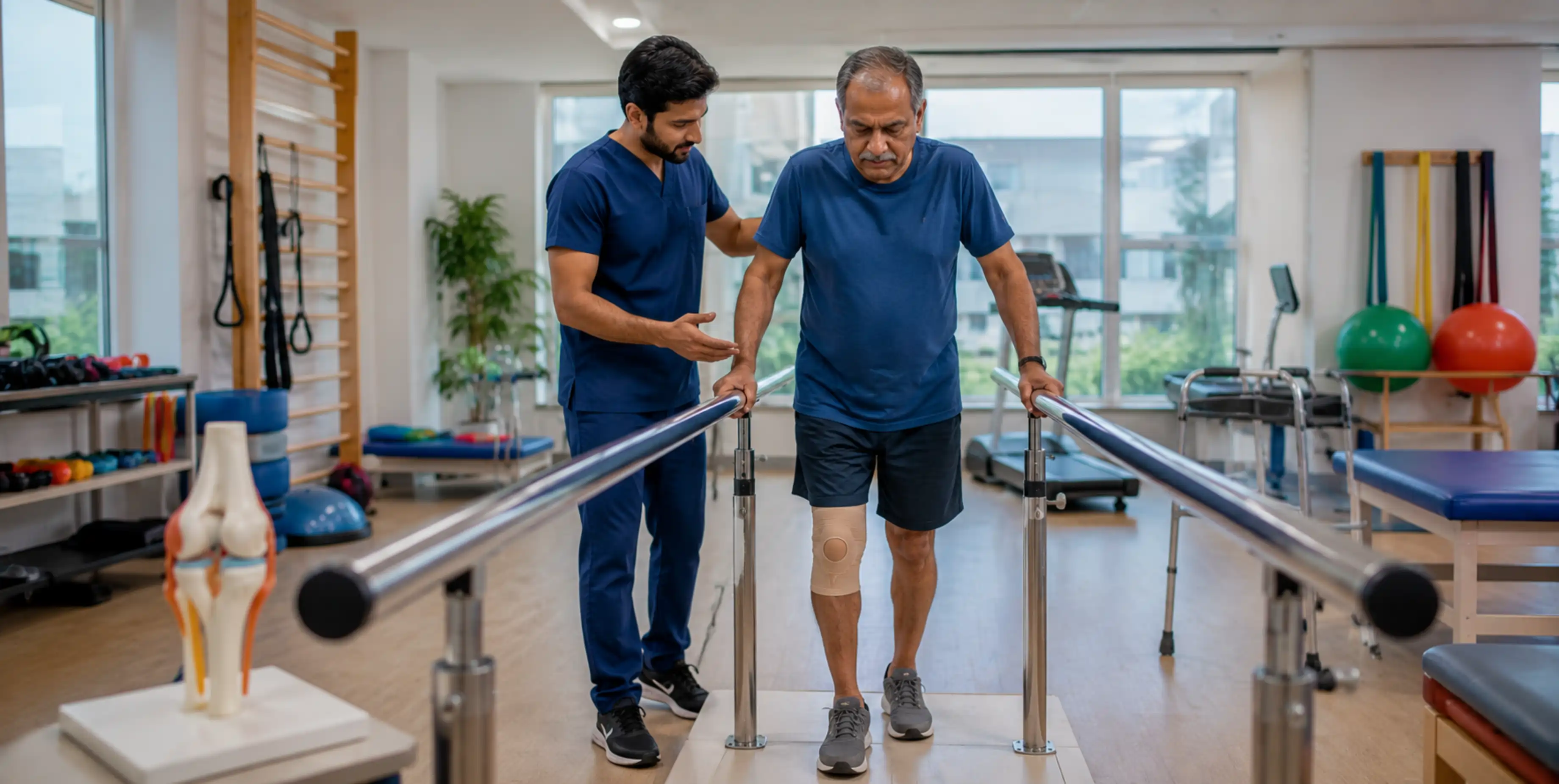
In the early stage (weeks 1–2): The focus is on reducing swelling, regaining basic movement, and getting the patient safely mobile with a walker. Simple breathing and ankle exercises are also introduced to prevent blood clots.
In the intermediate stage (Weeks 3–6): Exercises become more active. Patients work on improving the range of motion, building muscle strength, and gaining confidence in walking without excessive support.
In the later stage (Week 6 onwards): The goal shifts to restoring functional movement, climbing stairs, sitting and rising from chairs, and gradually returning to daily activities. Balance and gait training also become part of this phase.
At leading centres offering physiotherapy in Mumbai, therapists use a combination of manual therapy, therapeutic exercises, ultrasound therapy, and electrical stimulation to speed up healing and reduce pain.
Care Tips to Support Your Recovery at Home
Physiotherapy sessions are important, but what you do between sessions matters equally. Here are some simple care tips to support your recovery:
- Do your home exercises daily, even 15 to 20 minutes makes a real difference
- Apply ice packs to the joint after exercise to manage swelling (15–20 minutes at a time)
- Elevate your leg when resting to reduce inflammation
- Avoid sitting on very low surfaces or crossing your legs, especially after knee replacement
- Use your walker or cane until your physiotherapist clears you to walk independently
- Eat a protein-rich diet to help your muscles heal and rebuild
- Sleep in a position recommended by your therapist to avoid unnecessary joint stress
- Attend every scheduled session, skipping sessions can delay your recovery significantly
Patients who follow these tips consistently, alongside structured post-joint replacement physiotherapy, tend to regain function and independence much faster than those who don't.
Conclusion
Recovery after joint replacement is a journey, and physiotherapy is your most reliable companion on that journey. Whether you have undergone surgery at a knee replacement hospital in Mumbai or another city, getting the right rehabilitation support makes all the difference. In Mumbai, if you are looking for trusted physiotherapy post-surgery, choose a centre with experienced therapists who understand orthopaedic rehabilitation. The right guidance today will mean a stronger, more pain-free tomorrow.