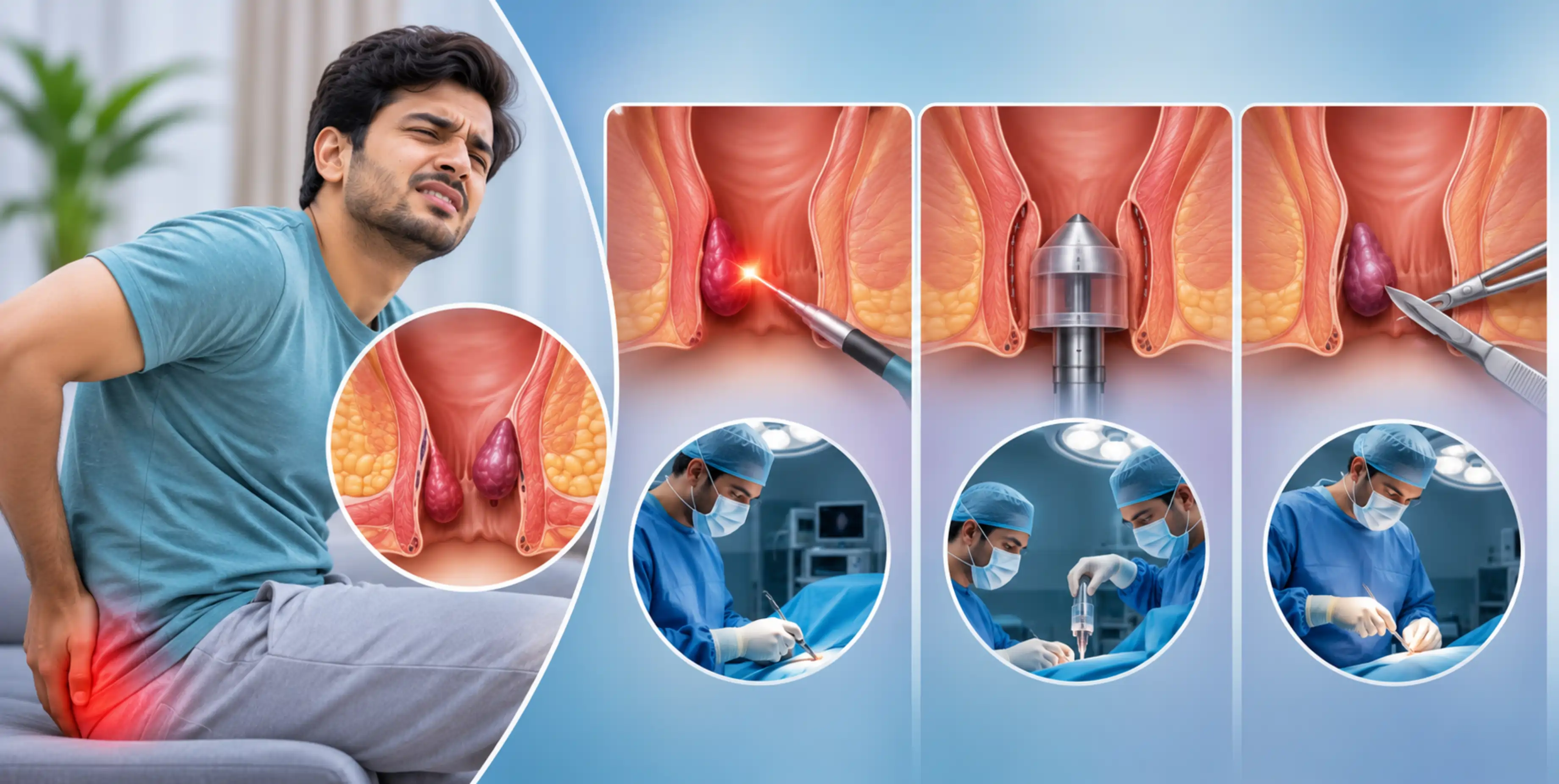
Piles Surgery Options Compared: Laser Treatment, Stapler Surgery and Traditional Surgery
Piles, or haemorrhoids, are very common, and most people who have them never need an operation. When symptoms persist despite simple measures, the choice of procedure becomes the main question. Patients exploring piles surgery in Bandra West Mumbai often find laser, stapler and traditional options described in very different ways, so a clear comparison helps.
What Are Piles?
Piles are swollen cushions of blood vessels and tissue in the anal canal. They are classified by how far they descend:
- Grade I: bleeding without any prolapse
- Grade II: prolapse during straining that returns on its own
- Grade III: prolapse that needs to be pushed back
- Grade IV: permanently prolapsed and cannot be pushed back
Causes and Symptoms
Chronic constipation, straining, prolonged sitting on the toilet, a low-fibre diet, pregnancy, obesity and heavy lifting increase pressure on the veins in the area.
Common symptoms include bright red blood on the stool or tissue, itching, a feeling of fullness, a lump near the anus and discomfort after passing stool. Pain is more typical of a fissure or a clotted pile than of ordinary internal piles.
Diagnosis
A doctor examines the anal area, performs a digital rectal examination and usually uses a short scope called a proctoscope to see internal piles. Bleeding should never be assumed to come from piles alone, particularly after the age of 45, with a change in bowel habit, weight loss or a family history of bowel cancer. In those situations, a colonoscopy may be advised to exclude other causes.
When Is Surgery Needed?
Grade I and II piles generally respond to fibre, fluids, stool softeners, creams and sitz baths. Office-based procedures such as rubber band ligation or sclerotherapy are used for some patients. Surgery is considered mainly for grade III and IV piles, for repeated bleeding or prolapse despite other treatment, and for piles that are combined with other anal conditions.
Piles Surgery Options Compared
Traditional (conventional) haemorrhoidectomy
The surgeon removes the piles tissue with a scalpel, scissors or energy device. It has the longest track record and the lowest rate of recurrence, which is why it is often preferred for large, grade IV or complicated piles. The trade-off is more pain after surgery, with a recovery of roughly two to three weeks before normal activity feels comfortable.
Stapler haemorrhoidopexy
A circular stapling device lifts the prolapsing tissue back into position and cuts off part of its blood supply. Because the staple line sits higher in the canal, where there are fewer pain-sensing nerves, patients generally have less pain and return to routine earlier. Studies report a higher chance of prolapse coming back than with conventional surgery, and rare complications such as persistent pain or narrowing can occur. It suits mainly circular, grade II to III prolapse.
Laser treatment
Laser energy shrinks the piles tissue and its blood supply, either by reducing it from within or by removing it with minimal tissue damage. The wounds are small, and many patients report less pain and a quicker return to activity. The evidence on long-term recurrence is smaller than for conventional surgery, and it may not be suitable for large or advanced piles. Costs are often higher because of the equipment.
Is Laser Piles Surgery Better Than Traditional Surgery?
Not in every case. For many patients with early or moderate piles, laser offers a gentler recovery. For advanced grade IV piles, a conventional operation may give the most durable result. The better question is which option fits the grade, the anatomy and the surgeon’s experience, since results depend as much on technique and aftercare as on the instrument. Anyone seeking laser piles treatment in Mumbai should ask what the long-term recurrence rate is for their specific grade and not just the recovery time.
Questions to Ask Before Surgery
- Which grade are my piles, and is surgery actually needed?
- How many of this specific procedure has the surgeon performed?
- What is the realistic recurrence rate for my grade?
- What are the full costs, including follow-up?
- What recovery time should I plan for at work?
Recovery and Prevention
After any piles surgery, doctors usually advise stool softeners, adequate water, a high-fibre diet, warm sitz baths and prescribed pain relief. Avoid straining and long periods on the toilet. Some bleeding and discomfort during the first bowel movements is expected, but heavy bleeding, fever, inability to pass urine or severe worsening pain needs prompt review.
Prevention works for everyone: fibre from vegetables, fruit and whole grains, plenty of fluids, regular exercise, and not delaying the urge to pass stool.
Conclusion
Laser, stapler and traditional surgery each have a place, and none is the single best choice for everyone. The right option follows from the grade of the piles, other anal findings and a frank conversation with the surgeon. Patients looking for the best piles surgeon in Bandra West should focus on experience and a clear explanation of options rather than on the technology alone. For assessment and guidance on treatment, patients can consult the surgical team at Holy Family Hospital, Bandra West. If you are wondering where you can get piles surgery in Mumbai, begin with an examination, because a proper diagnosis comes before any decision on the procedure.