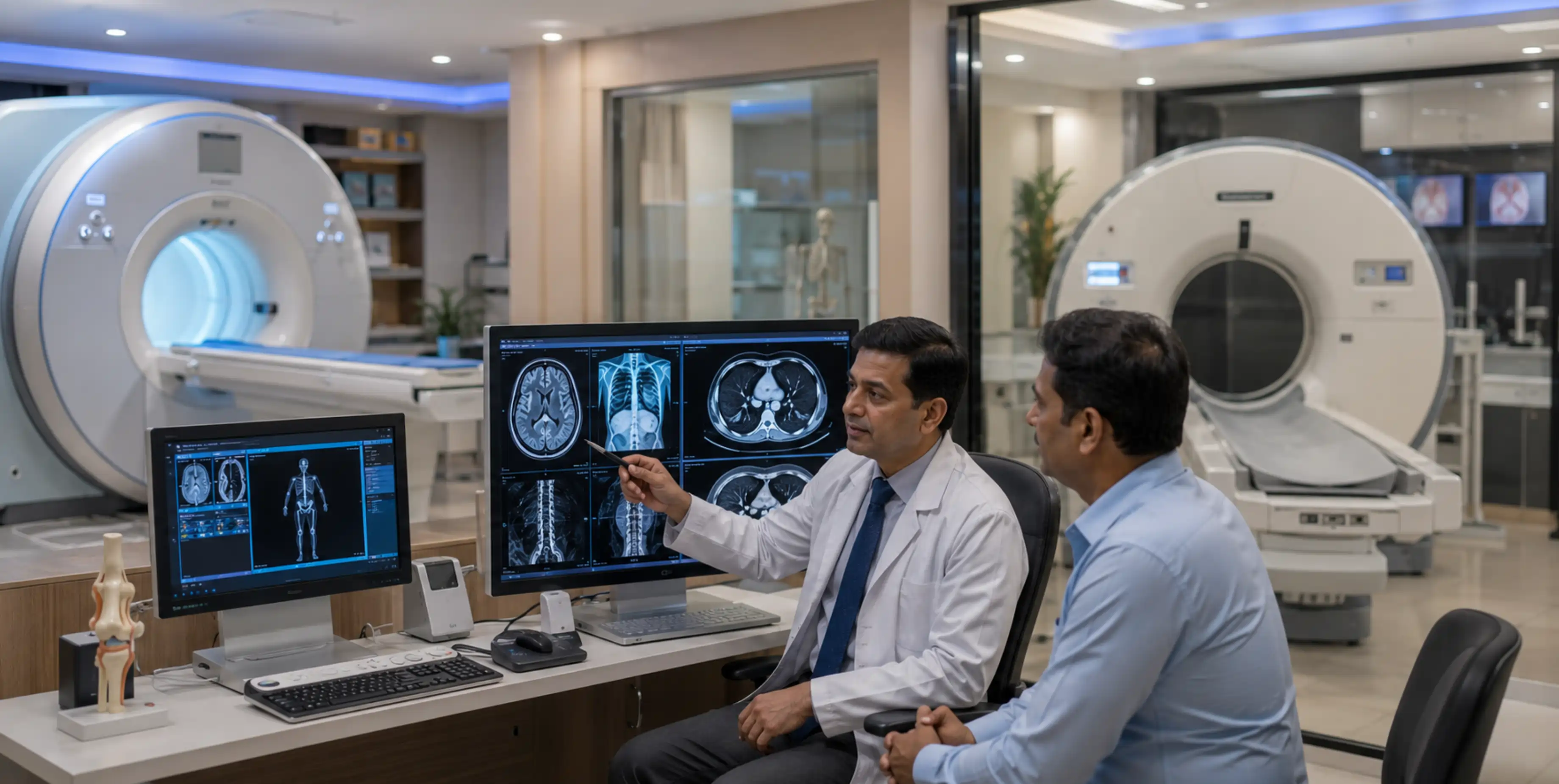
MRI vs CT scan: Which Diagnostic Test Do You Really Need?
Your doctor has just handed you a referral for a scan. The referral may say MRI, CT scan, or both, and you may not know which one you are getting or why. You are not alone. This is one of the most common questions patients ask before their appointment at the diagnostic imaging centre in Mumbai.
MRI and CT scans serve different purposes. One is not better than the other. The right choice depends entirely on what your doctor needs to see. This guide explains the difference in plain language, so you feel informed and confident before you walk in.
When Does a Doctor Recommend an MRI or CT Scan?
Imaging tests are recommended when your symptoms need a closer look than a physical examination alone can provide. Some common situations where your doctor might refer you for a diagnostic scan include the following:
- Persistent or worsening headaches that do not respond to medication
- Back or neck pain with numbness, tingling, or weakness in the limbs
- A sports injury involving suspected ligament or cartilage damage
- Abdominal pain where the cause is not immediately clear
- Post-accident evaluation, especially after a head or chest impact
- Monitoring a known condition like a tumour, cyst, or chronic inflammation
- Chest symptoms such as shortness of breath or suspected pulmonary embolism
MRI vs CT scan: A Side-by-Side Comparison
The table below covers the key differences between an MRI scan and a CT scan, the factors that actually matter when you are deciding what to expect from your appointment.
MRI Scan: What It Is Best For
If your doctor is concerned about soft tissue, meaning anything that is not bone, an MRI scan is usually the first recommendation. The magnetic field produces highly detailed images that a CT scan simply cannot match for the brain, spine, and joints.
Conditions commonly evaluated with MRI
- Brain tumours, strokes, and multiple sclerosis
- Spinal cord compression or disc herniation causing back or leg pain
- Ligament and tendon injuries, such as ACL or rotator cuff tears
- Joint problems in the knee, shoulder, hip, or wrist
- Pelvic organ conditions, including endometriosis or uterine fibroids
- Unexplained nerve pain or weakness
If you have been referred for an MRI scan in Mumbai, Holy Family Hospital's radiology team provides same-day appointments with reports read by on-site radiologists and not sent offsite.
CT scan: What It Is Best For
A CT scan is the preferred choice when speed matters, particularly in emergency or trauma settings. It also provides excellent detail for bone structures, the chest cavity, and abdominal organs, where MRI images can be harder to interpret.
Conditions commonly evaluated with a CT scan
- Head injuries and internal bleeding after an accident
- Chest conditions: pulmonary embolism, lung infections, or masses
- Kidney stones, abdominal masses, or bowel conditions
- Bone fractures that are complex or hard to see on an X-ray
- Guiding biopsy procedures or surgical planning
- Cancer staging to check if the disease has spread
Our advanced radiology services include a 128-slice CT scanner with emergency reporting within 30 minutes for urgent cases, available around the clock at our Bandra facility.
CT scans use low doses of radiation and are considered safe when clinically necessary. Your doctor will only recommend one when the diagnostic benefit clearly outweighs the minimal exposure involved.
How to Prepare for Your Scan
Preparation depends on the type of scan and whether contrast dye will be used. Here is what applies in most cases:
Before an MRI scan
- Remove all metal objects, including jewellery, hairpins, and underwire bras
- Inform the staff about any implants, pacemakers, or metal fragments in your body
- If contrast (gadolinium) is used, mention any history of kidney problems or allergies
- Wear comfortable, loose clothing, you may be given a hospital gown
Before a CT scan
- If contrast dye is involved, stay well hydrated before the scan
- Mention any allergy to iodine or previous contrast reactions to the radiologist
- For abdominal CT scans, you may be asked to fast for a few hours beforehand
- Inform the staff if there is any possibility that you are pregnant
After either scan, most patients can go about their day normally. Your doctor will guide you based on whether sedation or contrast was used.
Why Choosing the Right Diagnostic Imaging Centre in Mumbai Matters
A scan is only as useful as the report that comes with it. The diagnostic imaging centre you choose should have experienced radiologists who read results accurately, not just a machine that takes the images.
Look for centres that offer clear turnaround times on reports, are willing to explain findings to you in plain language, and have a team that coordinates directly with your treating doctor. If you have been referred for an MRI scan or a CT scan in Mumbai, choose a facility backed by qualified specialists and a track record of clinical accuracy, not just the nearest or cheapest option.
7 Things to Tell Your Doctor Before Any Imaging Scan
- Any metal implants, pacemakers, joint replacements, surgical clips, or dental work
- Allergies, especially to iodine or contrast dye from a previous scan
- Current medications, including blood thinners or diabetes medication
- Kidney or liver conditions, since contrast dye is filtered through these organs
- Any possibility of pregnancy, even early or uncertain
- History of claustrophobia, in case sedation needs to be arranged for MRI
- Any previous scan results for the same area, bring them along if you have them
Conclusion
Knowing whether you need an MRI scan or a CT scan comes down to what your doctor is looking for soft tissue detail or speed and bone clarity. As a medical imaging hospital in Mumbai, Holy Family Hospital provides both, with on-site specialists, same-day appointments, and reports your treating doctor can act on immediately.