Mammography Screening: Who Needs It, At What Age & Why Early Detection Saves Lives
Breast cancer, caught early, is a very different conversation than breast cancer caught late and a mammography test remains one of the best tools we have for catching it early. Yet screening rates in India still lag the awareness that exists around the disease, largely because women delay a test that takes under half an hour and involves no real recovery time.
What a Mammogram Actually Does
It's a low-dose X-ray of breast tissue, sensitive enough to pick up lumps or abnormalities that are often too small to feel by hand. This is the backbone of most breast cancer screening programmes in India and elsewhere, precisely because it can flag changes years before they'd otherwise be noticed.
When Should Women Get Mammography?
As a general guide:
• Women aged 40 and above should discuss regular screening with their doctor
• A family history of breast cancer can mean starting earlier
• Screening frequency, yearly or every two years, depends on individual risk
• Women with a personal history of breast conditions may need closer, more frequent monitoring
Your doctor will fit this timeline to your actual history, not a one-size-fits-all rule.
What Happens During the Scan
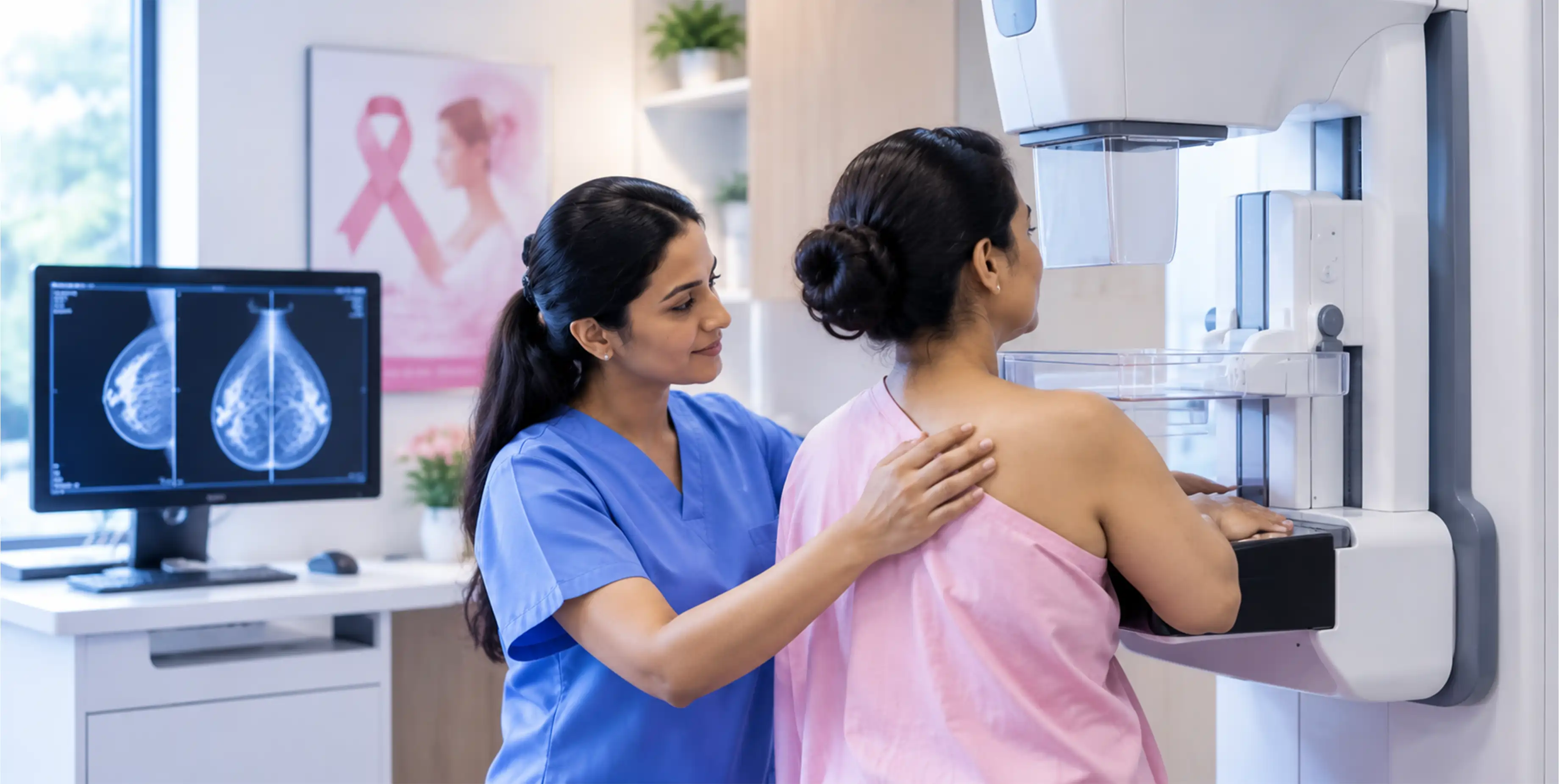
The breast is compressed briefly between two plates to get a sharp image. It's uncomfortable for a few seconds, not something most women describe as painful, and the whole test wraps up in under 30 minutes.
Making Sense of the Results
Most mammograms come back normal. When something unclear does show up, doctors typically ask for additional imaging or a biopsy to confirm what it is. This doesn't automatically mean cancer, but it does need a follow-up rather than being ignored. Any biopsy taken at this stage goes through the same histopathology test process used to confirm tissue disease anywhere else in the body.
Reports are usually explained in terms of standardised categories ranging from clearly normal to findings that need a biopsy for confirmation. Ask your radiologist or breast specialist to talk you through exactly which category your result falls into, rather than trying to interpret the terminology on your own.
Why Catching It Early Actually Matters
Cancers found before they've spread generally respond far better to treatment and often need less aggressive intervention. That's the entire reasoning behind screening guidelines existing for women without any symptoms at all.
Choosing a Reliable Mammography Centre
Look for a mammography centre with the following:
• Modern digital imaging equipment
• Experienced, dedicated radiologists
• Clear follow-up protocols for unclear results
• Reasonable turnaround time for reports
Holy Family Hospital's dedicated Breast Clinic runs every Monday from 10:00 AM to 2:00 PM, led by Dr. Natasha Vaz and Dr. Nikhil P. Dharmadhikari, and covers everything from early detection and diagnosis to surgical treatment ranging from lumpectomy to mastectomy, including reconstructive procedures where needed. This combination cuts down both missed findings and the frustration of unnecessary repeat scans.
AI's Growing Role in Breast Cancer Detection
AI breast cancer detection tools are increasingly used alongside radiologists to flag subtle patterns across mammogram images. They support the radiologist's read rather than replace it.
Between Screenings: Why Breast Awareness Still Matters
A mammogram isn't meant to be the only line of defence being familiar with how your breasts normally look and feel makes it easier to notice any genuine change between scans. A new lump, puckering of the skin, nipple discharge, or a change in shape or size are all reasons to get checked promptly rather than waiting for the next scheduled screening, regardless of what age bracket you fall into.
At a first visit to the breast clinic, expect a physical examination alongside a discussion of family history and any symptoms you've noticed before a mammogram or ultrasound is recommended based on your specific risk profile. Nothing about that first visit requires an existing diagnosis or a referral. It's precisely the kind of appointment meant for someone who simply wants a professional opinion on something they've noticed.