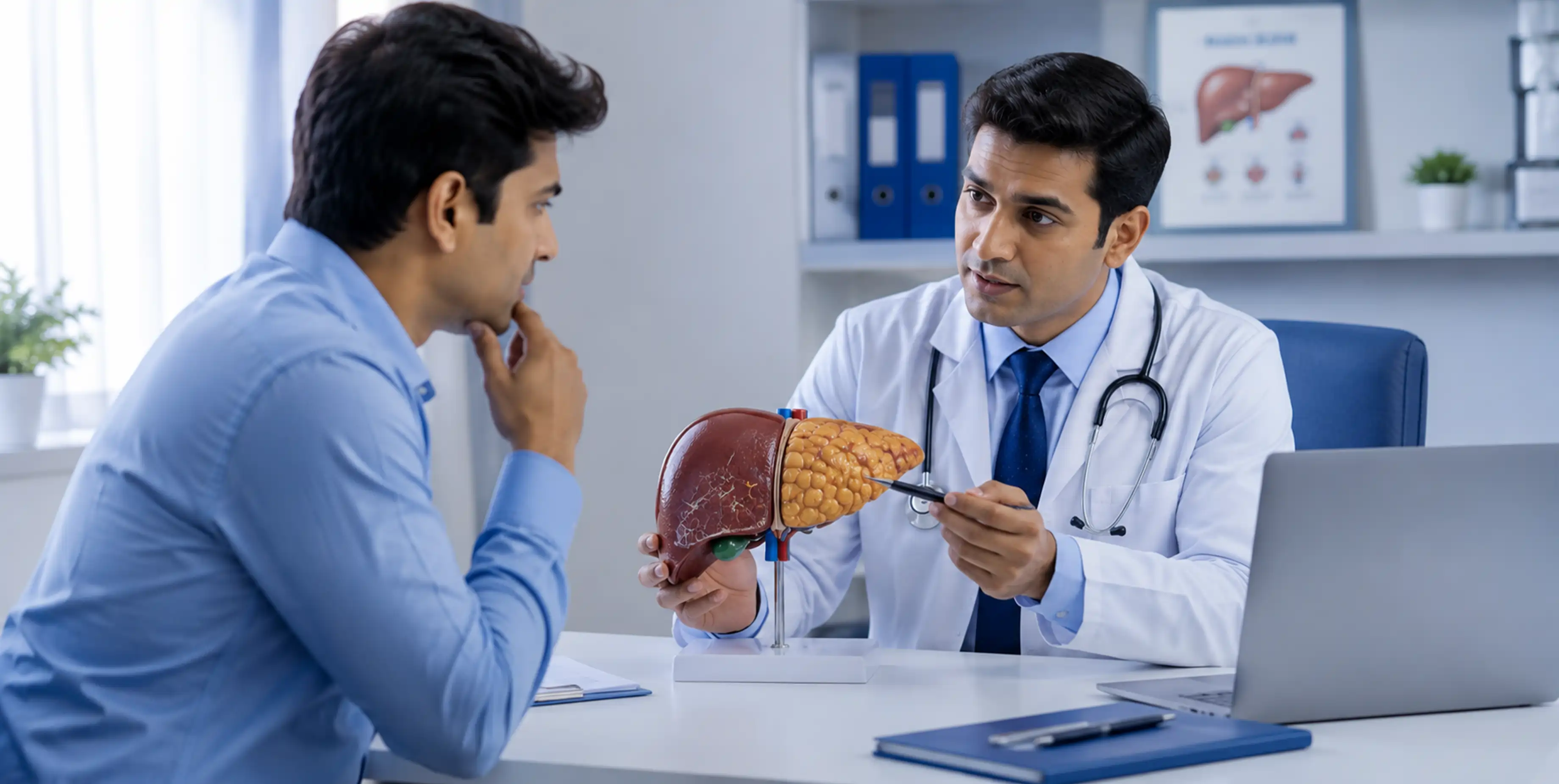
Fatty Liver Disease: Early Symptoms, Stages, Treatment & Can It Be Reversed Naturally?
Many people find out they have fatty liver disease completely by accident during a routine ultrasound for something unrelated. It's become that common, driven largely by rising rates of obesity, diabetes, and sedentary lifestyles across urban India. Here's what actually This matters once you know the stage you are likely in and whether the damage can genuinely be undone.
Early Fatty Liver Symptoms Are Easy to Miss
Fatty liver symptoms are often absent altogether in the early stages, which is precisely why it tends to be discovered by chance rather than by complaint. When symptoms do show up, they usually include:
• Fatigue or general weakness
• A dull ache under the right ribs
• Unexplained weight loss
• Appetite dropping off
• Yellowing of the skin or eyes, in later stages
The Stages, in Order
- Simple fatty liver – fat buildup with no real inflammation
- Steatohepatitis – fat buildup with inflammation, damaging liver cells
- Fibrosis – scarring sets in as the liver tries to repair the damage
- Cirrhosis – advanced scarring that permanently affects liver function
Catching the disease in stage one or two changes the entire trajectory of treatment. The gastroenterology department at Holy Family Hospital uses FibroScan, a non-invasive scan that measures liver stiffness, to detect fibrosis and fatty liver early without requiring a biopsy in most cases.
What Fatty Liver Treatment Actually Involves
Fatty liver treatment leans heavily on lifestyle change in the early stages, more than medication:
• Gradual, sustainable weight loss
• Cutting back on sugar and refined carbohydrates
• Limiting or cutting out alcohol entirely
• Staying physically active
• Managing conditions like diabetes or high cholesterol that often go hand in hand with it
In more advanced stages, doctors may add medication or step up monitoring for complications. Holy Family Hospital's Liver & Pancreatic Clinic, held every Tuesday from 2:00 PM to 4:00 PM, is built specifically for this kind of ongoing evaluation and follow-up, rather than folding liver care into a general OPD queue where continuity between visits is harder to maintain.
Can Fatty Liver Be Reversed Naturally?
Can Fatty Liver Be Reversed Naturally? In the early stages, yes, sustained lifestyle changes over several months can significantly cut liver fat. Once fibrosis or cirrhosis has set in, though, it becomes much harder to reverse the damage, even if the right care can still slow progression.
Why a Liver Health Checkup Is Worth Doing Proactively
A liver health checkup, blood tests, plus an ultrasound and a FibroScan where needed, can catch this before any symptoms show up at all, which matters most if you already have diabetes, carry extra weight, or lead a fairly sedentary life. Holy Family Hospital's gastroenterology consultants, including Dr. Khurshed Vazifdar, Dr. Mehul Choksi, Dr. Mit Shah, and Dr. Sundeep Shah, see this exact profile of patient regularly.
AI's Role in Liver Disease Assessment
AI liver disease assessment tools can help interpret risk factors and flag when further testing is worth pursuing, working alongside your doctor's evaluation rather than replacing it.
Who's Most Likely to Develop It
Fatty liver disease isn't limited to people who drink heavily. In fact, non-alcoholic fatty liver disease is the more common version seen today, and it tracks closely with obesity, type 2 diabetes, high cholesterol, and a sedentary lifestyle. Even people who consider themselves generally healthy can have it, particularly if there's extra weight carried around the abdomen or a family history of diabetes.
This is precisely why doctors increasingly recommend a liver check as part of routine health screening once any of these risk factors are present, rather than waiting for a symptom that, as covered earlier, often doesn't show up until the disease has already progressed. A simple ultrasound during an annual health check-up is often enough to catch it at a stage where lifestyle changes alone can still make a difference.