10 Warning Signs You May Need an Endoscopy Before Your Condition Becomes Serious
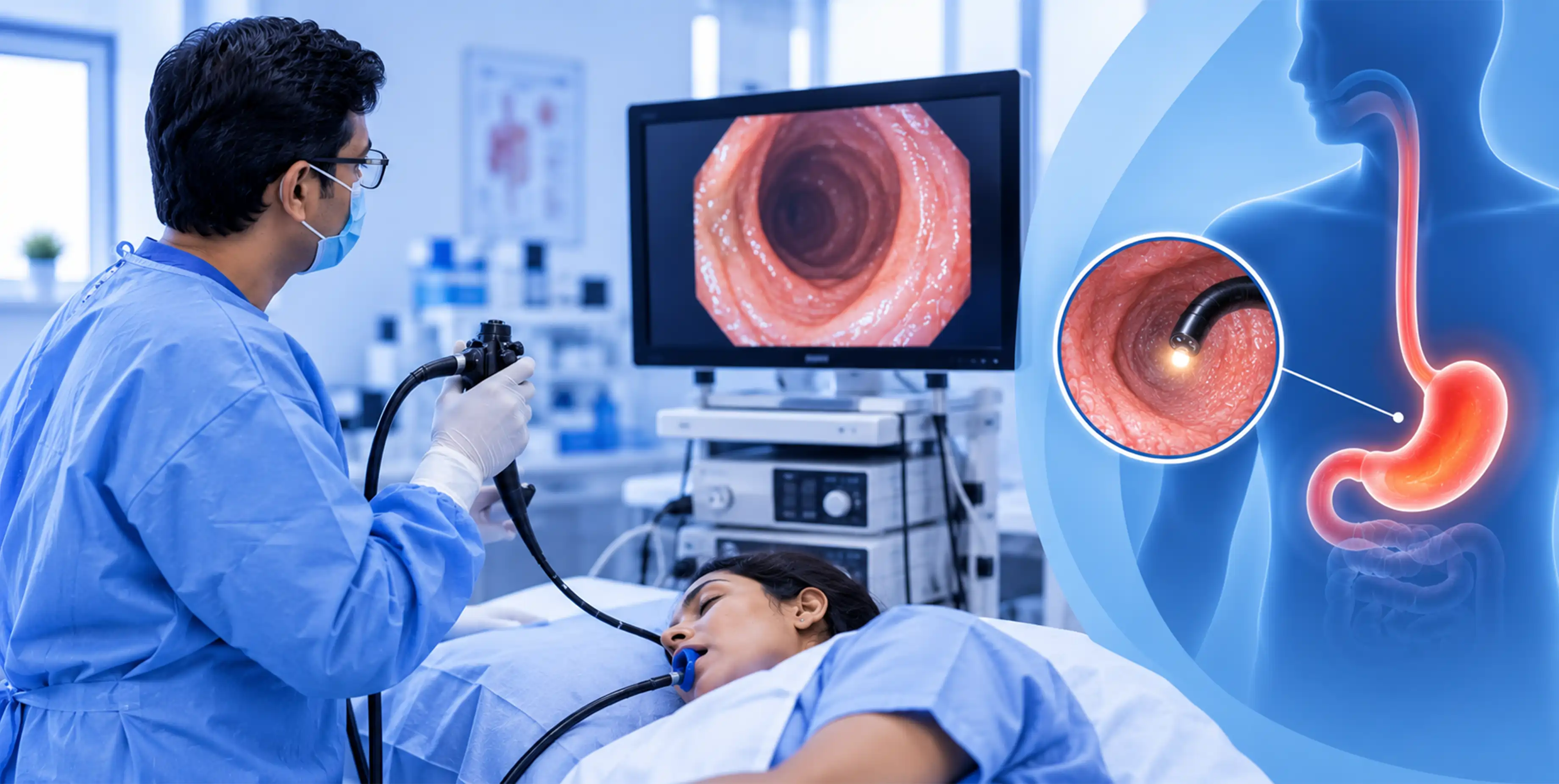
A thin, flexible tube fitted with a camera travels through your digestive tract, letting a doctor see the lining directly instead of guessing from symptoms alone. An upper GI endoscopy specifically covers the food pipe, stomach, and the start of the small intestine. A colonoscopy, its counterpart lower down the digestive tract, examines the colon and rectum for polyps, inflammation, bleeding, and early signs of cancer — often removing polyps in the same sitting.
10 Warning Signs Not Worth Brushing Off
1. Persistent heartburn that antacids no longer touch
2. Trouble swallowing, or pain while doing it
3. Weight dropping without any change in diet
4. Stomach pain that's stuck around for weeks rather than days
5. Vomiting blood, or stools that look black and tarry
6. Nausea with no obvious cause
7. Feeling full after just a few bites
8. Anaemia that a doctor can't otherwise explain
9. A family history of stomach or oesophageal cancer combined with new symptoms
10. Symptoms that creep back the moment you stop acid medication
Two or three of these lasting beyond a couple of weeks is generally reason enough to get checked, and symptom five needs attention right away rather than a wait-and-watch approach.
When Do You Need Endoscopy?
Typically when symptoms haven't responded to basic treatment, when there are red flags like bleeding or unexplained weight loss, or simply to follow up on something an earlier scan couldn't fully explain.
Is Endoscopy Painful?
Uncomfortable, more than painful. Most people describe a gagging sensation rather than actual pain, and sedation or a numbing throat spray handles most of it. The whole thing is usually over in 10 to 15 minutes.
Walking Through the Procedure
The process is fairly straightforward from the patient's side:
• Fasting for several hours before the test
• A mild sedative or throat spray administered beforehand
• The scope passed through the mouth while the doctor examines the lining in real time
• A biopsy taken on the spot, if anything looks worth investigating further
• A short recovery period before heading home, usually the same day
Most people feel a little groggy afterward but are otherwise fine within a couple of hours. Beyond routine endoscopy, Holy Family Hospital's gastroenterology team also performs ERCP for bile duct and pancreatic conditions, EUS (endoscopic ultrasound) for detailed imaging of digestive organs, and FibroScan, a non-invasive scan that checks the liver for stiffness and early fibrosis without needing a histopathology test at all.
Picking the Right Place for It
An endoscopy hospital in Bandra, Mumbai, with experienced gastroenterologists and up-to-date equipment matters more than people realise both for getting an accurate read and for making the whole experience less unpleasant. Holy Family Hospital's gastroenterology and endoscopy team includes Dr. Khurshed Vazifdar, Dr. Mehul Choksi, Dr. Saifee Plumber, Dr. Mit Shah, Dr. Sundeep Shah, Dr. Darshan Parekh, and Dr. Vivek Kumar Singh.
When a Colonoscopy Makes Sense Even Without Symptoms
Not every endoscopic procedure is triggered by a warning sign. Colonoscopy is also used as a preventive screening tool, generally recommended from age 45 onwards, or earlier for anyone with a family history of colorectal cancer or inflammatory bowel disease. The idea is to catch and remove polyps before they ever have the chance to turn into something more serious, which is a very different exercise from investigating an active symptom.
If a colonoscopy or upper endoscopy is recommended purely as a screening measure, that's not a sign anything is already wrong. It's the same logic behind a mammogram or a routine blood panel: catching problems before they announce themselves.